Hearing Health Magazine Caters to People with Hearing Loss
By Madeline Baro, Associated Press
INGLESIDE, Texas (AP) – Paula Bonillas is keeping hearing-impaired people on the cutting edge.
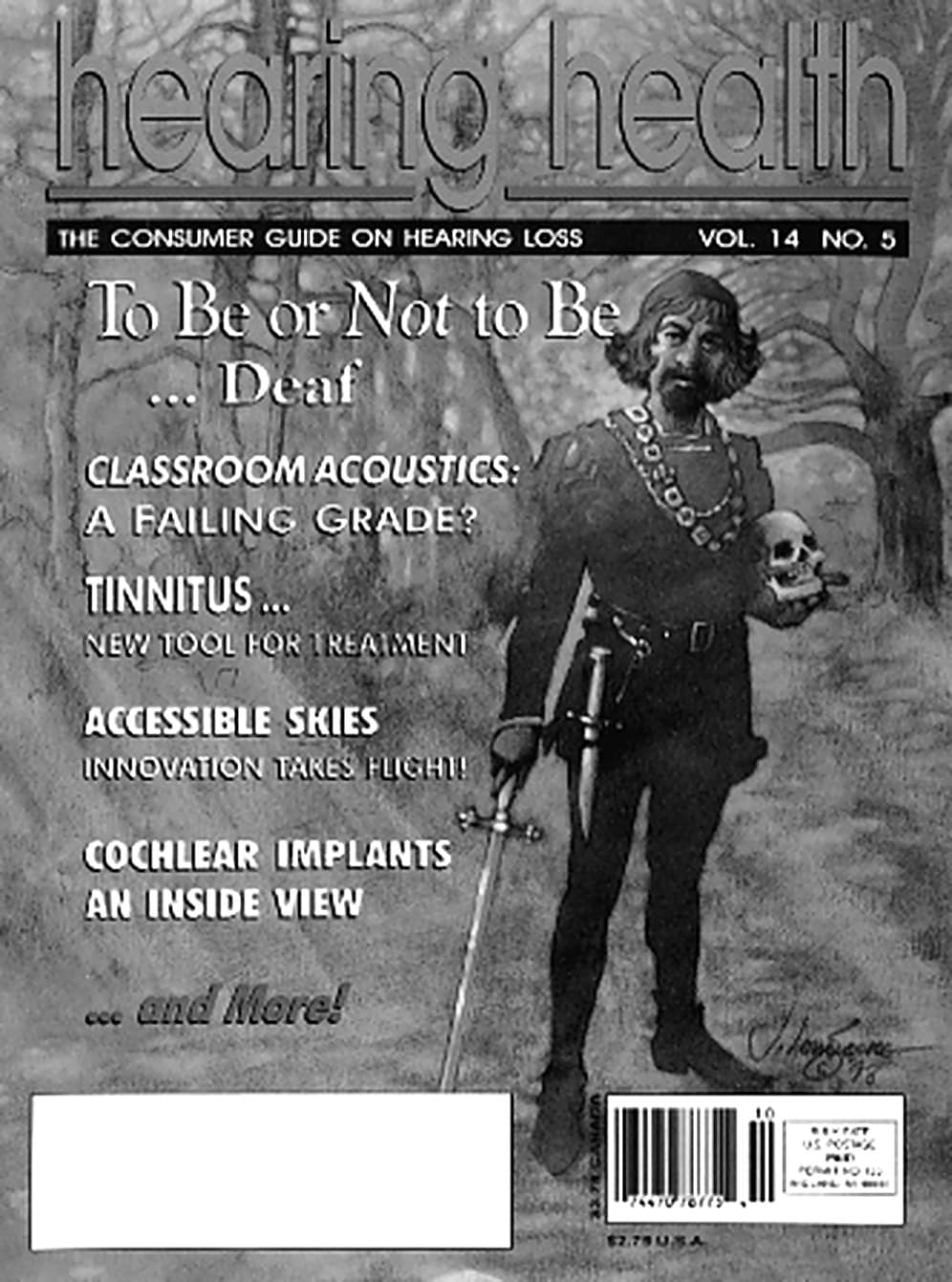
Ms. Bonillas publishes Hearing Health, a magazine that aims to keep deaf and hearing-impaired people up to date on the latest devices available to them. She lost her hearing in 1992, but today can hear with the help of a cochlear implant.
“It’s pretty amazing,” she said. “I can drive down the street talking on the cell phone because of technology.”
Ms. Bonillas, a wife and mother of two, also gets help from captioning on television programs, a telephone adapter and flashing alerts, but says “I have a family, so if something rings, I’ll know.
“There’s a wealth of devices, but a lot of people will leave the (hearing) professional’s office with new hearing aids knowing nothing about the support they can get from these other devices,” she said.
The Stamford native has been hard of hearing her whole life _ a condition that worsened with time. Her hearing loss began interfering with her job 15 years ago when she was teaching junior high school math in Irving.
“The difficulties had escalated to the point where I needed a lot more than just hearing aids,” Ms. Bonillas said.
She couldn’t make phone calls to parents while she was in school because she needed an amplifier for the phone. At the time, employers were not required to accommodate employees with disabilities, so Ms. Bonillas found herself going home to make phone calls.
Finally, someone told her about a portable amplifier she could use. It changed her life. She was surprised to learn about the number of devices that exist to help the hearing-impaired.
“I quit my job and started the magazine,” Ms. Bonillas said. “I decided it would be my mission to get the information out to others like myself who needed more than hearing aids.”
Although she’d decided on a mission, she didn’t realize what she’d gotten herself into and didn’t know the first thing about running a magazine.
“I was very optimistic,” she said.
At first, she wrote articles for the magazine herself, using her name in a variety of ways. She said although the magazine has survived for 15 years through jumps and starts, she was fortunate to have the right people come along to help her.
At one point, she couldn’t pay her printer and was going to close up shop, but an advertiser bailed her out.
The magazine, which comes out six times a year and sells for $2.75 apiece and $18 for a one-year subscription, prints 20,000 copies per issue. Reader surveys show, however, about 50,000 people actually read each issue, Ms. Bonillas said.
The magazine is available at newsstands and is shipped to professionals who work with the deaf and hearing-impaired. Ms. Bonillas said she’s received letters from readers as far away as Bangkok.
Although her magazine’s been through tough times, Ms. Bonillas believes the service it provides is invaluable.
“If I’d continued in teaching I’d be much wealthier, even in Texas,” she said. “I just feel that Hearing Health fills a need. It can make a real difference in one little article for some people.”
Topics range from legislation to humorous anecdotes. The July/August issue included articles on coping with a post-lingual hearing loss and treatments for chronic tinnitus, a ringing, roaring or hissing sound in the ears.
“I am very pleased with your educational magazine,” one reader gushed in a letter to the publication. “Where have you been all my life?”
A reader from England who suffers from tinnitus wrote that an article on the ailment was useful. The mother of a 10-year-old girl with an inner ear disorder known as Meniere’s disease praised the magazine for including information on the condition.
The products advertised in the magazine include an infrared listening system to amplify television sound and a device that dries and sanitizes kids’ hearing aids which sweat or a dip in a swimming pool could damage.
AVR Communications, an Israel-based company that markets hearing aids and other hearing assistive devices, is one of Hearing Health’s advertisers.
Joel Skoog, spokesman for the company’s North American division in Eden Prairie, Minn., said an obstacle in marketing such devices is people’s notions based on clunky hearing contraptions of the past.
“I think there are a lot of people who know they exist but there’s a lot of misinformation,” he said.
www.hearinghealthmag.com
Related stories

Business
Understanding Variable Annuities
Tanya S. Hammersmith
Business
Bell Atlantic Sponsors Library TTY Program

Business
Crisis or Opportunity
Louis J. Schwarz
Business
The Rewards of Socially Responsible Investing
By Allen N. Jones, Merrill Lynch
Business
Gary Robson Joins VITAC Captioning Firm

Business
A Word About 401(k) Retirement Plans
Louis J. Schwarz